As the most veteran but least popular — at least here in the States — group on the original Lollapalooza tour, this made them far more enigmatic and mysterious than anyone else on the bill. The year is 1991 and the only thing I know about them, really, before investigating further, is their cover of Dear Prudence, and most recent comeback hit, Kiss Them For Me. By the time this tour rolls into the San Francisco area (technically Mountain View), though, the Modesto Bee is describing them as “modern dance rock,” which even to my untrained eyes/ears sounds like a major misnomer.
The timing on Kiss Them For Me is interesting because I’m inevitably wondering what led to what. It feels like the universal reaction to that single’s success — particularly fueled by and possibly mostly contained to the video on MTV — is that this is interesting, and unexpected, but almost nobody would describe this as their best work. Still, weird ripples like this are not without precedent. The Human League of all people did for example enjoy a similar run from out of nowhere, right around this same time, with Heart Like A Wheel, which was on the video network’s daily top ten for weeks. But, although uncertain if the fluke hit led to Siouxsie’s Lollapalooza invite, or the other way around, I’m at least attempting to learn a little more by investigating their back catalog.
My initial thoughts listening to their debut album, The Scream, are that this doesn’t sound like punk or new wave to me, or post-punk or any other associated sub-category. It’s more as though they are members of some obscure tribe who’ve lived in caves for thousands of years, separated from the remainder of mankind, and by some fluke happened to have developed a somewhat similar music to ours. Absorbing more, it then occurs to me that other moments are reminiscent of a darker B-52s, one which prefers black to Day-Glo and paisleys — but then again, that comparison doesn’t exactly invalidate the whole disconnected from modern society bit.
Actually, I do know a smidgen more about this group, like how two much more famous musicians were briefly members, and a third nearly was. Yet this only makes matters more bizarre, when you consider how relatively obscure Siouxsie and company have remained by comparison.
The first of these is future Sex Pistols bass “player” Sid Vicious, who cut his teeth as a drumming Banshee. Before joining those punk pioneers, he was a founding member of this ragtag tribe instead, in 1976, although quitting after just one show. Meanwhile, also in those early days, a friend of theirs named William Broad is teaching Steve Severin to play bass. This is because the figure already calling himself Billy Idol is basically considered their readymade guitarist.
Idol is supposed to play that debut show with them, but pulls out at the last minute. He has some legitimate concerns about the impact this primitive bunch might have on his burgeoning career, and the reputation of his own regular band, Chelsea. All of which is quite understandable. Still, rather than becoming discouraged, Suzi and Steven find that this continual slagging has only increased their resolve.
“We just wanted to take the whole thing to its logical extreme,” Siouxsie eventually says of this period, their determination to punch through somehow despite not even knowing how to play — as opposed to the then quite trendy punk stance of merely pretending to have no skill.
But fast forward a handful of years, to 1983, and a much more famous, future Hall Of Fame guitarist does in fact join the group: Robert Smith of the The Cure. Sid Vicious was technically an original member and Billy Idol very nearly so, but even allowing for these, this is the greatest of the double take inducing head scratchers. Even then, it already felt like Robert Smith had been threatening a solo album for eons (one he’s still yet to deliver upon, incidentally) and when he and his mates suffer another of their many blowups during this juncture, while once again insistent he plans on going it alone, instead what happens is…he decides to really show these cats by…joining Siouxsie and the Banshees instead! Yes. That’ll learn ‘em.
All told, his involvement with Siouxsie and company will last about a year and cover two releases, a double live album and a studio one. Which is all the more fascinating because Siouxsie strikes me as the female version of Robert Smith, and I’m wondering who initially influenced who in this regard. It’s a look we would now probably refer to as goth, but it didn’t really exist before. From the outset, witnesses found her stage presence enchanting, her sultry, exotic singing voice mesmerizing, as if erupting full-formed the first time she ever tried it.
This clip is taken from a popular British show called The Old Grey Whistle Test. This British institution, though considered somewhat passe by 1978, had been on the air since ’71 and still drew a sizable audience. Occurring about one week before their debut album came out, this would mark Siouxsie and the Banshees’ first significant TV exposure.
Well, say one thing about this mysterious quartet, they appear to mean business — and look quite cool while doing so! The three males are in dark if not fully black clothing, mostly toeing the line with the gaunt ghost look that is all the rage at this juncture, with mohawks and safety pins and other punk totems already old hat. Siouxsie meanwhile has on a powder blue sports jacket with frilly sleeves, black pants, knee high black boots. At the mic she is impassioned yet inscrutable, and the dudes surrounding her reveal even less.
On Metal Postcard, my favorite of the two songs they play, Siouxsie seems almost in a trance, clutching the microphone stand as if dependent upon it for support. An impression bolstered as she frequently executes this strange almost swooning dance move, as though nearly fainting and just about dropping to her knees, though fortunately able to cling to this stand as one would a lifeboat. Inwardly drawn, reciting these lines like she’s casting a spell, a chant committed to memory. By the end of this, she’s even pounding the microphone itself with her fist, as though demanding it obey her.
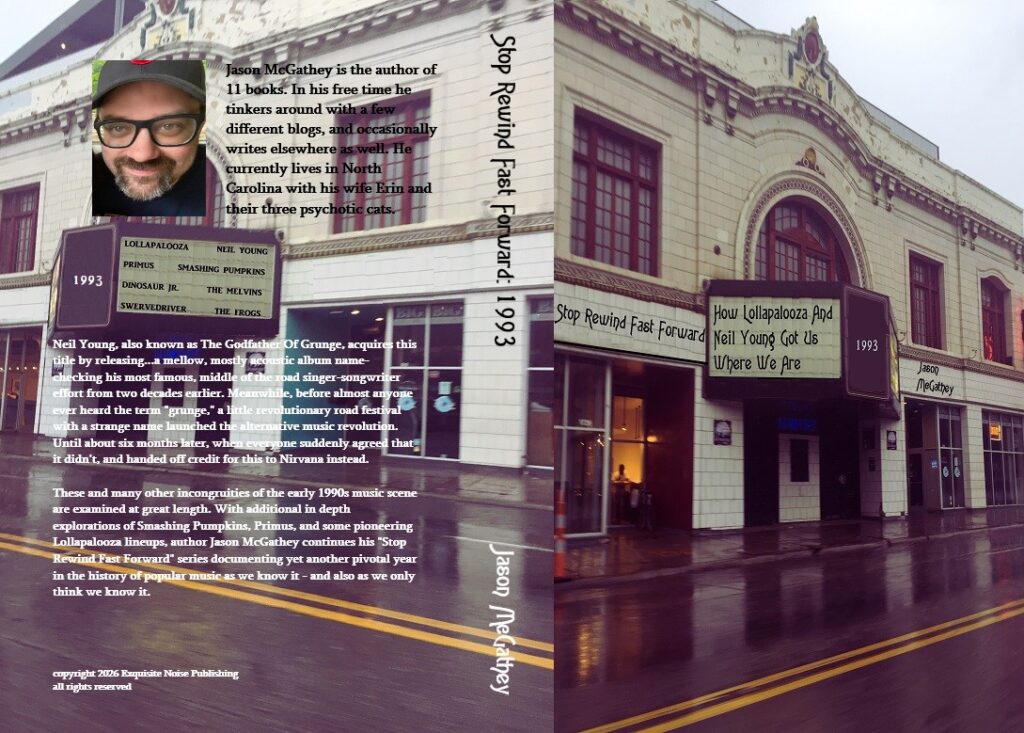
The above excerpt is but a sliver of my extended essay on Siouxsie and the Banshees, found in my latest music history book, Stop Rewind Fast Forward: 1993. If this grunge-era recap seems like your cup of strong, independently brewed java, you can order it direct from me in a couple different places:
